Holistic Nutrition – It’s Brain Food Too!


Being a Holistic Nutritionist isn’t just about telling clients to eat their veggies.  It’s almost like being a life coach, helping people reach their lifestyle goals.  Nutrition just happens to be a huge piece of the puzzle.

I’ve been doing a lot of reading recently about making my life the one I most desire to lead.  And I’m getting inspired.  Some people may shy away from the self-help section of the library/bookstore, but this is the section that is going to change lives!  You are the only person that can take the steps to make your life the one of your dreams.  And most of us need some help!

There are some amazing leaders in the field of self-help.  Tony Robbins, Joe Vitale, Robin Sharma all come to mind as front runners in their fields.  There is so much information in their books that I feel I’ve got to read them over and over again to extract all of their yummy brainfood.  I just finished Robin Sharma’s “The Greatness Guide.”   I couldn’t put it down.  There were 101 short chapters – and some amazing lessons.

Some of the lessons aren’t new, and some of them are.  All of them are inspiring.  I could pull hundreds of quotes out of this book.  But the quote that awakened me the most was this: “The price of discipline is always less than the pain of regret.”  This is precisely why I started getting up at 5:30am every day.

I jump out of bed, put on my yoga clothes, and I’m on the mat in a heated room by 6am.  I’m home by 8am and have had the most serene, yet exhilerating workout before I would otherwise have woken up!  This past week has been the best week of 2009 – simply because I took action.  I took a step to get more out of my days – and my life.

This simple habit has made me more productive, happier, and more energetic.  It’s really unbelieveable when you think about it.  If you simply get up 2 hours earlier every day – you will add 14 hours to your week and an entire month to your year!  By getting up 2 hours earlier I have added 2 hours of productive time to my days – all because I took action to change my life in the direction I want it to go.

If you want to change your life – take action now.  Read some books.  Learning is so important to stay young and full of life.  Learn something new every day.  Exercise your mind.  You just may learn something that will change your life – and the lives of those around you.  It must be impossible to read a Robin Sharma book and not let it touch your life.  The second you make a change in your lifestyle – you will change in a way that people will notice.  Just today I was accused of being “very bubbly and happy” – and I responded “that’s because I am!”  And the woman smiled.   Don’t be scared of the self-help section any longer!  Pick up a good book and change your life.  Take action, now.  Oh yes, and please eat your veggies!
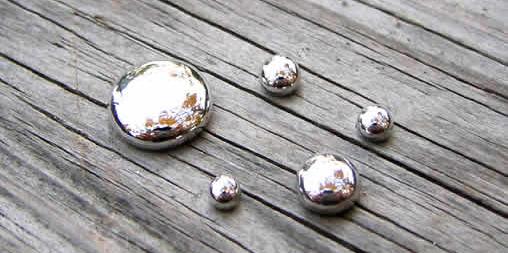
High Fructose Corn Syrup May Contain Mercury

mercury_drops_large

A recent study published in the journal Environmental Health in the US found that much of the high fructose corn syrup (HFCS) that is replacing sugar in processed foods is tainted with mercury.

Mercury is neurological toxin – toxic to humans.  It is a metal that causes  kidney and liver damage and white blood cell imbalance.  It is related to underactive thyroid for its ability to displace iodine in the thyroid glands.  Significant amounts in the body can produce insomnia, dizziness, fatigue, depression, memory loss, dermatitis, and hair loss.

How does mercury get into the food supply?  Mercury cell chlor-alkali products are used to produce thousands of other products including food ingredients such as citric acid, sodium benzoate, and high fructose corn syrup.  HFCS is used as a sweetener to enhance the shelf life of food products.

The problem lies in the realization that mercury residue may be found in all products produced by the mercury cell chlor-alkali industry.  In 2003 the Environmental Protection Agency reported in the Federal Register that on average approximately seven tons of mercury were missing from each plant in the year 2000.  There are 8 plants in the US, each containing as much as 8,000 pounds of mercury, and every year, unaccounted for mercury losses are reported to the EPA.

Mercury grade caustic soda and hydrochloric acid are primarily used by the HFCS industry.  Several chemicals are required to make HFCS, including caustic soda, hydrochloric acid, alpha-amylase, gluco-amylase, isomerase, filter aid, powdered carbon, calcium chloride, and magnesium sulfate. 

If mercury grade caustic soda, hydrochloric acid, or sodium hypochlorite are used in the milling process that turns the corn and the cornstarch molecule into HFCS, it just may end up in your food.  Environmental Health Officers and researchers at National Institute of Standards and Technology found low levels of total mercury in foods they tested.  Researchers found mercury in nearly 50% of samples of commercial HFCS tested in 2005.

In 2007, the average daily consumption of HFCS in the US was 49.8 g per person according to the US deparment of Agriculture website.  But there are those who consume much more that this amount when you account for the amount of soda some people consume, while others consume none at all.

You may notice HFCS as one of the first ingredients on product labels.  Ingredients are listed in descending order by weight, which means that if HFCS is the first ingredient on a label, there is more HFCS than any other ingredient in that product.  And if HFCS is one of the first few ingredients, there is a chance that it is accompanied by traces of mercury, if it was manufactured with mercury grade chlor-alkali chemicals.

Since mercury is an accepted neurotoxic heavy metal, the American Academy of Pediatrics has recommends that we minimize any form of mercury exposure to our children to ensure optimal child health and nervous system development.  I would add to avoid mercury exposure especially during pregnancy – a time when mothers think it acceptable to indulge their sweet tooth – perhaps to the detriment of their unborn child.

Mercury isn’t the only reason I suggest avoiding HFCS.  High doses of unnatural sugars (and even the natural ones) go straight into the bloodstream and attack the walls of the arteries while spiking blood sugar in a manner that sends the whole body into an unbalanced frenzy.

Choose natural sugars wherever possible such as unpasteurized honey, agave syrup, daikon root syrup, and real maple syrup in small amounts.  Avoid commercial processed foods and simply look to food labels for some added motivation to avoid them!  Simply now knowing what chemicals go into the processing of HFCS is a good enough reason to avoid anything containing it, that’s for sure!

Source:

“Mercury from chlor-alkali plants: measured concentrations in food product sugar.”
Renee Dufault, Blaise LeBlanc, Roseanne Schnoll, Charles Cornett, Laura Schweitzer, Lyn Patrick, Jane Hightower, David Wallinga, Walter Lukiw. Environmental Health 2009, 8:2 (26 January 2009).  doi:10.1186/1476-069X-8-2